
Fence Staining in Franklin — HOA-Approved Colors
In Franklin, fence-stain color is often an HOA decision as much as a design one. We help you land on an approved cedar-tone, then coat both sides picket-by-picket with an airless spray with back-brush and seal every post cap — with every stage inspected before it is called finished.
15+ years • 5.0★ on Google (56 reviews) • Nextdoor Neighborhood Favorite in five different years • Licensed & insured
How Fence Staining & Sealing Works in Franklin
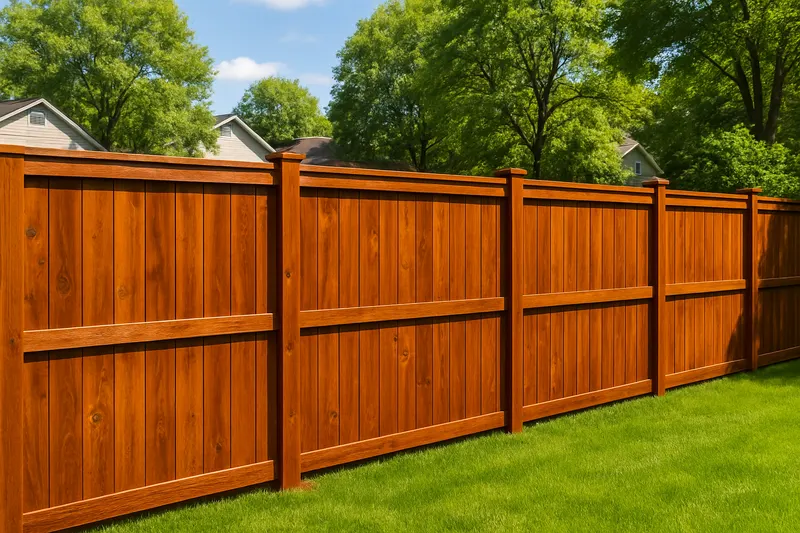
Approved color first, then full coverage. Once the shade clears the committee, we coat both sides of the fence picket-by-picket, work the TWP 100 series stain in with an airless spray with back-brush, and seal every post cap. New cedar is left to weather three to six months so it will take the stain. The result is even, HOA-appropriate, and built to hold up on a Williamson County lot.
What Franklin Homeowners Need to Know
Williamson County subdivisions take fence color seriously. Westhaven, Fieldstone Farms, and McKay's Mill run architectural review committees that can dictate fence-stain color and finish, so we help you choose an approved cedar-tone semi-transparent stain and document it if the committee asks. Getting the color right up front keeps a Franklin fence project from stalling. Read our 5.0★ Google reviews, or stain the deck in Franklin at the same time.
Fence Staining & Sealing Questions From Franklin Homeowners
- What stain do you use on fences?
- We use TWP 100 series — a penetrating oil-based wood preservative specifically formulated for fencing. It soaks into the wood rather than forming a film, which means it wears gradually instead of peeling. Colors range from natural cedar tones to darker walnut shades.
- Can you stain a fence that's never been stained before?
- Yes — and it's actually the ideal time to stain. New, bare wood absorbs stain deeply and evenly. We recommend letting new cedar or pressure-treated fences weather 3-6 months before the first stain application so the wood pores open up properly.
- Do you seal fence post caps?
- Yes — every post cap sealed is part of the standard process. Post caps are the most vulnerable point on a fence because they expose end grain to direct rainfall. We apply extra stain to post caps and make sure stain soaks into every joint and fastener point.
- What time of year is best for fence staining in Nashville?
- Spring and fall are ideal — temperatures between 50-85 degrees with low humidity. Summer works too with morning application before peak heat. We avoid staining when rain is forecast within 48 hours or when temperatures drop below 50 degrees overnight.
Also Available in Franklin
Interior Painting
Walls, ceilings, trim, and doors finished with an artist's precision and premium paint.
View Franklin details →Exterior Painting
Siding, trim, brick, and stucco repainted with real prep and premium exterior coatings.
View Franklin details →Cabinet Painting
Solid-wood cabinets refinished to an HVLP-sprayed, factory-smooth finish.
View Franklin details →Deck Staining
Decks cleaned, brightened, and sealed with penetrating stain built to last.
View Franklin details →Franklin homeowners often match the fence stain to the deck in one visit.
View Deck Staining in Franklin →