Deck Staining in Bellevue — Built for Tennessee Weather
No decks in the metro fight moisture like Bellevue's. Under a heavy canopy near Percy Warner Park and the Harpeth River, we clean and brighten the cedar, confirm it's dry, and back-brush a penetrating TWP 1500 stain into the grain — and tell you up front how often it will need a re-coat. Every stage is inspected before the job is called finished.
15+ years • 5.0★ on Google (56 reviews) • Nextdoor Neighborhood Favorite in five different years • Licensed & insured
What Deck Staining & Sealing Includes in Bellevue
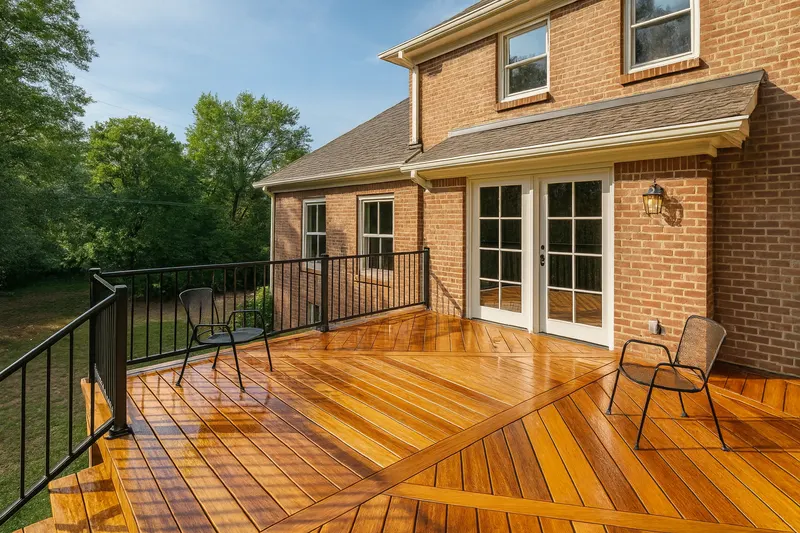
Ingrained algae comes off before anything goes on. We pressure wash hard, run a sodium percarbonate wash to lift the biological growth, apply an oxalic acid brightener, and confirm moisture below 15% before staining. TWP 1500 penetrating stain is back-brushed into the grain. In Bellevue's shade, decks often need a re-coat every 18 to 24 months rather than the usual two to three years, and we tell you that before the work begins.
Why Bellevue's Environment Matters for Your Project
Bellevue's setting guarantees a shorter re-stain cycle. The extremely heavy tree canopy near Percy Warner and Edwin Warner Parks and the Harpeth River corridor keep decks in River Plantation and Harpeth Valley Park damp and shaded year-round — so stain protection breaks down in 18 to 24 months instead of the typical two to three years. Knowing that up front helps homeowners plan for the upkeep. Read our 5.0★ Google reviews, or stain the fence in Bellevue in the same visit.
Deck Staining & Sealing Questions From Bellevue Homeowners
- Can you stain a brand new deck?
- New pressure-treated lumber needs to weather for 3-6 months before staining so the wood can dry and open its pores. We can assess whether your new deck is ready by testing moisture levels. Staining too early traps moisture and causes premature failure.
- What time of year is best for deck staining in Nashville?
- Spring (April-May) and fall (September-October) are ideal — temperatures between 50-85 degrees with low humidity give stain the best conditions to absorb and cure. We can work in summer, but plan around morning application before peak heat.
- Will staining protect my deck from rot and insects?
- Yes — quality penetrating stains contain wood preservatives and UV blockers that protect against moisture absorption, UV fading, mildew growth, and insect damage. Regular restaining is the single best thing you can do to extend your deck's lifespan.
- Do you repair deck boards before staining?
- We identify damaged, warped, or rotting boards during the estimate. Minor repairs like resetting popped nails and sanding rough spots are included. Board replacement is quoted separately if needed. Staining over rotten wood wastes money — we'll be honest about what needs fixing first.
More Painting Services in Bellevue
Interior Painting
Walls, ceilings, trim, and doors finished with an artist's precision and premium paint.
View Bellevue, Nashville details →Exterior Painting
Siding, trim, brick, and stucco repainted with real prep and premium exterior coatings.
View Bellevue, Nashville details →Cabinet Painting
Solid-wood cabinets refinished to an HVLP-sprayed, factory-smooth finish.
View Bellevue, Nashville details →Fence Staining
Fences fully protected — both sides coated, every post cap sealed.
View Bellevue, Nashville details →Under Bellevue's canopy, staining the fence alongside the deck keeps all the cedar protected.
View Fence Staining in Bellevue, Nashville →